
Aloha Hula Best (Compilation Album) – Slack Key Meets Hula

Introduction: The Hula & Slack Key Connection
Introduction
Hula has long been intertwined with Hawaiian music. In the 19th century, as guitars (introduced by paniolo cowboys) spread through the islands, Hawaiians developed kī hō‘alu (slack key guitar) and began using it to accompany hula and song. In traditional hula ku‘i (a style blending old chant with new Western melodies), slack key guitar often provided the instrumental backdrop alongside ukulele and bass. Unlike Western guitar styles, slack key players didn’t always strum the exact song melody; instead, they would play a repeated thematic fragment with improvised variations and ornamental flourishes (hammer-ons, pull-offs, etc.) to support the singers or dancers. This created a rich, rolling accompaniment perfectly suited to the gentle sway of hula ‘auana (modern hula).
Cultural Resonance
Both slack key guitar and hula are vital expressions of Hawaiian identity. Hula is more than dance, it’s a way to tell stories and honor history through graceful movement. Slack key, played in open tunings with a rhythmic finger-picked style, often mirrors the heartbeat of hula. Master players even incorporate percussive techniques reminiscent of hula implements. For example, slack key legend Ledward Kaapana recalls seeing his mentor Sonny Chillingworth slap the guitar soundboard “like an ipu (gourd drum)” while playing, to mimic hula drumbeats. This synergy of rhythm and melody means many mele (songs) composed for hula have become slack key standards, and vice versa. Slack key guitar’s nahenahe (sweet, soothing) sound provides an intimate atmosphere for hula kahiko (ancient-style) chants and energizes hula ‘auana songs about love, nature, and Hawaiian life. In short, slack key and hula grew up together, and their deep relationship continues in performances today – from backyard kanikapila jam sessions to the largest stages at the Merrie Monarch hula festival.
Below, we present a track-by-track guide to the Aloha Hula Best album, highlighting each song’s background and the performing artist. Following that is a section of artist biographies – spotlighting the slack key masters who bring these hula songs to life. Whether you scan this page after buying the album or simply to learn more, we hope it enriches your appreciation for Hawaiʻi’s music and dance.
Track 1: “Pua Hone” — Dennis Kamakahi
Background
“Pua Hone” (“Honey Flower”) is a modern Hawaiian love song Dennis Kamakahi composed in 1977 as a heartfelt proposal to his sweetheart, Robin. Its imagery uses kaona (hidden meanings) to compare the beloved to a dew‑touched blossom, evoking Makiki’s cool mists and the calm of evening. The melody moves with a gentle sway that invites hula ‘auana, and the refrain carries a vow that love strengthens with time. Over the years it became a standard across backyards, concerts, and hālau, precisely because its story is personal yet universal. In performance, singers often stretch the final phrase to linger on the sweetness promised by the title.
“Pua Hone was written as a musical proposal to his then–girlfriend, Robin.” — Liner notes
About the Artist

Dennis Kamakahi (1953–2014) was a revered singer‑songwriter and slack key guitarist, a pillar of the Hawaiian Renaissance era. He authored dozens of beloved mele that honor specific places and relationships, including “Wahine ʻIlikea” and “Kokeʻe.” His songwriting blends direct, singable melodies with layered poetry drawn from traditional sources and contemporary life. As a mentor and cultural advocate, he helped carry kī hō‘alu into classrooms, concert halls, and homes. His recordings remain reference points for hula and for Hawaiian language learners alike.
Lyrics
Original (Hawaiian)
O ʻoe ka wahine a ke aloha
I laila i ka uluwehi
Kuʻu pua hone i ka laʻi
Hone ʻana i kēhau o Makiki
ʻO wau kou aloha
I ka noe kuahiwi
He uʻi no ʻoe i ke kula
I wili ʻia me ka
ʻIeʻie o Leilono
Haʻina mai ana ka puana
Kuʻu pua hone i ka laʻi
He nani maoli nō
English Translation
You are the woman that I love
There in the lush verdure is
My honey flower in the calm
Kissed by the dew of Makiki
I am your love
In the mountain mist
You are a beauty on the plains
Entwined with the sacred
ʻIeʻie vine of Leilono
This ends my story
For my honey flower in the calm
A true beauty, indeed
Track 2: “Kuʻu Lei Awapuhi” — Keola Beamer
Background
Composed in 1951 by Emily K. N. Taylor, “Kuʻu Lei Awapuhi” addresses a beloved as a fragrant ginger lei glistening in misty rain. The text uses call‑and‑response lines that naturally guide hula gestures and partner work. Its tempo and phrase lengths give dancers room to breathe, shaping elegant handwork around the words “Where are you, my love?” and “Here I am.” The melody sits comfortably in the voice and on guitar, which is why it has remained popular for generations. Modern recordings broadened its reach while preserving its poetic core.
“I always pause and listen to the environment… and what it might be saying to me.” — Keola Beamer
About the Artist
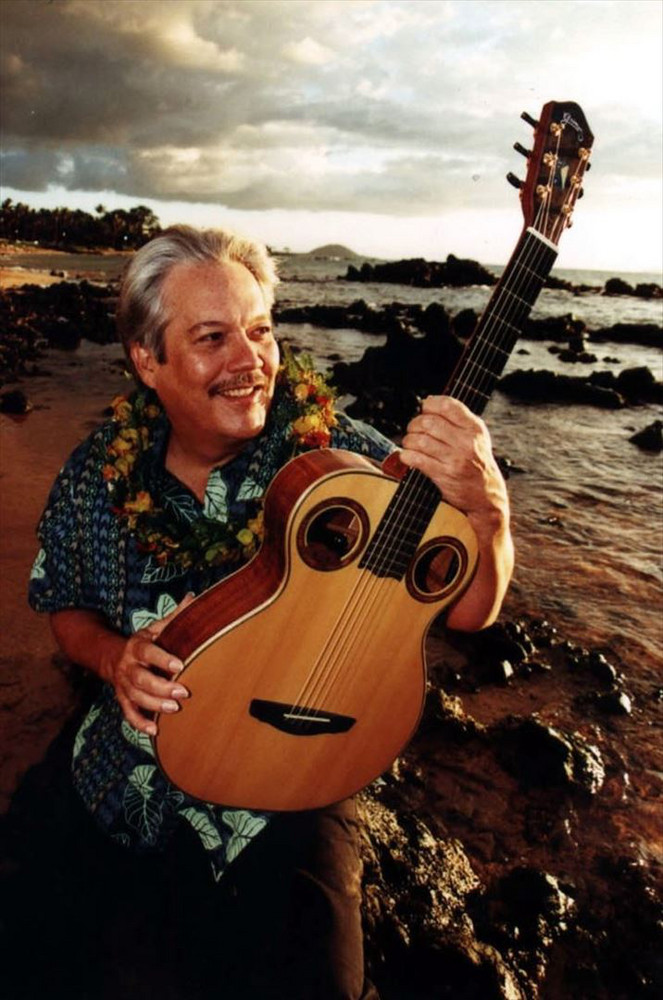
Keola Beamer (b. 1951) stands at the crossroads of tradition and innovation in kī hō‘alu. Emerging during the Hawaiian Renaissance, he affirmed that slack key could be both modern and deeply rooted. His tone, right‑hand control, and relaxed pulse have become hallmarks of the nahenahe sound. Beyond recording, he has taught, written, and performed internationally, bringing Hawaiian stories to new audiences. His interpretations of classic mele show refined restraint, letting lyric and melody lead.
Lyrics
Original (Hawaiian)
ʻAuhea la ʻoe e ke aloha
ʻAwapuhi pala o ka ua noe
A eia no me au
I ka poli o ke aloha
Hui
E kuʻu aloha ē (e ō)
ʻAuhea la ʻoe (e ia no au)
A huli aku au ia ʻoe
English Translation
Where are you, my love
Like the ginger, covered in the misty rain
Here, I am with you
In love’s sweet embrace
Chorus:
I call, my beloved (answer)
Where are you (Here I am)
Return to me
Track 3: “Ka Makani Kaʻili Aloha” — Cyril Pahinui
Background
This classic mele praises a famous wind said to “snatch back” lost love, a story associated with Kīpahulu, Maui. Verses honor the land while the refrain addresses a cherished lei, knitting romance and place into one image. The melodic line invites expressive falsetto as well as grounded baritone, so it adapts to many singers. For hula, flowing arm lines suggest the wind’s caress while traveling steps echo the lover’s return. The song’s enduring power lies in its belief that nature and love work together to mend what’s broken.
“I like the 12‑string for the octaves — it has the power…” — Cyril Pahinui
About the Artist

Cyril Pahinui (1950–2018), son of Gabby Pahinui, carried forward a family legacy central to modern Hawaiian music. His 12‑string textures and unhurried phrasing frame the voice with warmth and strength. Onstage he balanced gentle humor with reverence for kupuna repertoire, regularly performing with hula. As a teacher and cultural leader, he championed community jams and workshop programs. His recordings preserve a living, breathing style rather than museum pieces.
Lyrics
Original (Hawaiian)
E aloha ae ana nō au
I ka makani kaulana o ka ʻāina
Aʻu e hoʻoheno nei
Ka makani kā`ili aloha
Hui:
Kuʻu pua, kuʻu lei, kuʻu milimili ē
Kuʻu lei kau i ka wēkiu
A he milimili ʻoe a he hiwahiwa naʻu
A he lei mau no kuʻu kino
I aloha ʻia nō ia home
Ia home luakaha a ka malihini
Aʻu i noho ai a kupa
Ka makani kāʻili aloha
English Translation
I love the
Famous wind of this land
Mine to cherish
The wind named Love-snatcher
Chorus:
My flower, my lei, mine to cherish
My lei that I adore above all others
You are my favorite and precious to me
A lei forever for my body
Beloved is this home
This home so delightful to visitors
Where I stayed many years
With my love that was once snatched by the wind
Track 4: “Hemo Da Kope Bean” — Keola Beamer
Background
This playful piece’s Pidgin title means “pick the coffee bean,” and the music paints that scene with a steady, sunny groove. Bright, syncopated patterns mimic nimble fingers moving through coffee branches, while alternating bass suggests steady work under the sun. Listeners often hear a calypso lilt blended with classic slack key voicings, a reminder of how Hawaiian musicians absorb and localize outside influences. Its buoyant mood makes it a natural palate cleanser in a show set, and dancers can build charming ʻauana gestures around the imagery. Even as the arrangement feels light, the picking is precise and deeply rhythmic.
“They hemo (separate) the beans from the branch one at a time…” — Album notes
About the Artist
Keola Beamer’s instrumentals reveal his control of tone, space, and narrative on the guitar. He favors clarity over flash, letting harmonics and open‑string resonance tell the story. Throughout his career he has balanced innovation with respect for lineage, crediting mentors and documenting techniques for students. Collaborations with pianists, singers, and other guitarists broadened slack key’s audience without diluting its essence. This track captures his ease and humor in musical storytelling.
Lyrics
Wake up in the morning
When the sun shine big and bright
Down the trail to the fields we go
Where the red beans catch the light
Singing hemo, hemo — hemo da kope’ bean
Hemo, hemo — hemo da kope’ bean
Na, na, na — hemo da kope’ bean (repeat)
And when the wind blow down the hill
He whisper through the trees
A little sunlight in a life
Make a man live happily
Singing hemo, hemo — hemo da kope’ bean
Hemo, hemo — hemo da kope’ bean
Barefoot on the dusty ground and reaching up into the leaves
When the sun be goin’ down, singing ‘neath the kope’ trees
Hemo, hemo — hemo da kope’ bean (repeat)
Track 5: “Endlessly” — Sonny Chillingworth
Background
“Endlessly” began as a 1959 pop ballad and becomes, in Sonny’s hands, a Hawaiian love song framed by kī hō‘alu. The guitar softens the doo‑wop contours into a gentle sway that suits slow hula or a couple’s first dance. By placing an English lyric within a slack key texture, the track shows how local artists made outside repertoire feel at home. The vocal is intimate and unforced, as if sung across a living room rather than a stage. Its message — devotion that outlasts time — fits the album’s themes of love and place.
“Sonny was the first slack key guitarist to use the clave bass pattern… he also used it on ‘Endlessly.’” — Liner notes
About the Artist
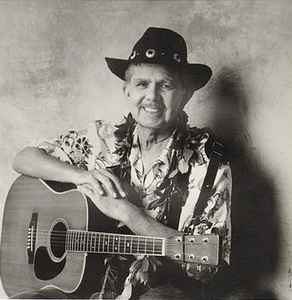
Sonny Chillingworth (1932–1994), “The Waimea Cowboy,” was among the most influential slack key masters of the twentieth century. He learned from elders and then opened doors for the next generation, encouraging a relaxed, personal approach to arrangement. His repertoire ranged from traditional mele to American folk and country songs, which he recast in nahenahe style. Students remember his generosity and ear for tone as much as his technique. This track highlights his tenderness as a singer alongside his elegant guitar work.
Lyrics
Higher than the highest mountain
And deeper than the deepest sea
That's how I will love you,
Oh, darling, endlessly
Softer than the gentle breezes
And stronger than the wild oak tree
That's how I will hold you,
Oh, darling
Track 6: “Ke Kali Nei Au (The Hawaiian Wedding Song)” — Ray Kāne
Background
Composed by Charles E. King in 1926, this mele vows patient, lifelong love — a meaning preserved when sung in Hawaiian. The phrases move like careful steps in a lei exchange, so it has become a favorite at weddings. The chorus’s declaration of a “moment of sweet aloha” allows for expressive dynamics without vocal strain. Ray Kāne’s treatment puts the poetry first and keeps the guitar spacious and supportive. It’s a reminder that intimacy, not volume, makes a love song linger.
“If we don’t share slack key, we’ll lose it.” — Ray Kāne
About the Artist

Ray Kāne (1925–2008) embodied the pure nahenahe approach to kī hō‘alu. His touch emphasized warmth and sustain, and he often let silences ring like breath between words. Though best known as an instrumentalist, he occasionally sang with a gentle, kupuna quality that listeners cherish. Recognized nationally, he still made time for community performances and teaching. His recordings are a model of restraint and feeling over flash.
Lyrics
Original (Hawaiian)
Eia au ke kali nei
Aia la i hea kuʻu aloha
Eia au ke huli nei
A loaʻa ʻoe e ka ipo
Maha ka ʻiʻini a ka puʻuwai
Ua sila paʻa ʻia me ʻoe
Ko aloha makamae e ipo
Kaʻu ia e lei aʻe nei la
Nou no ka ʻiʻini (nou ka ʻiʻini)
A nou wale no (wale no)
A o ko aloha kaʻu e hiʻipoi mau
Naʻu ʻoe (naʻu ʻoe)
E lei (e lei)
Naʻu ʻoe e lei
A he haliʻa kai hiki mai
No kuʻu lei onaona
Pūlupe i ka ua
ʻAuhea ʻoe ka ʻiʻini a loko
Na loko aʻe ka manaʻo
Huʻe lani ana i kuʻu kino
Kuʻu pua kuʻu lei onaona
Aʻu i kui a lawa ia nei
Me ke ala pua pikake
A o ʻoe kuʻu pua (O ʻoe kuʻu pua)
Kuʻu pua lei lehua (lehua)
Aʻu e liʻa mau nei hoʻopaʻa
Ia iho ke aloha
He lei (he lei)
`Oe na`u (`oe na`u)
He lei `oe na`u
English Translation
Here I am waiting
Where is my beloved
I've searched for you
Now that I've found you
Calm the desire of my heart
Sealed forever to you
Sweetheart you are so precious
I pledge my love to you alone
I desire you (desire)
True to you alone (alone)
With you joy will ever be mine
You're mine (you're mine)
Oh, my lei (Oh, lei)
You`re mine, my lei
Fond remembrance of the one who came
My fragrant lei
Drenched in the rain
Listen you, my heart's desire
To the thought within me
Open the heaven within my body
My flower, my fragrant lei
I will string and bind
Like the fragrant jasmine flower
You are my blossom (you, my blossom)
My lei of lehua (lehua)
My desire is always to be with and close
To my love
My lei (my lei)
You're mine
My lei, you're mine
Track 7: “Waikīkī Hula” — Cyril Pahinui
Background
A lively story‑song from the late 1920s, “Waikīkī Hula” follows a young man criss‑crossing Honolulu to see his sweetheart at Kamehameha School. Verses play with contrasts — cold Waikīkī vs. warm Kewalo — and sprinkle in landmarks that ground the tale. Humor arrives through running late, missed meetings, and the relief of reunion under the clock. Its cheerful tempo suits playful hula with mimed shivers, watch‑checking, and excited waves. The tune preserves a snapshot of Honolulu life while celebrating youthful romance.
“The most important thing I did was to listen.” — Cyril Pahinui
About the Artist
Cyril Pahinui’s upbeat reading keeps the story front and center while his 12‑string shimmer suggests the bustle of town. He had a gift for pacing, never rushing the lyric yet keeping energy high. His interpretations often feel like kanikapila brought to the stage — relaxed, inclusive, and rooted in community. Listeners new to Hawaiian language grasp the narrative through his clear diction. In his hands, “Waikīkī Hula” becomes both nostalgic and fresh.
Lyrics
Original (Hawaiian)
I Waikīkī anuanu au
Hoʻi au i Kewalo pumehana au
Aia i Kalihi kaʻu aloha
O ka hale kula nui ʻo Kamehameha
Mea ʻole ia loa i kahi manaʻo
Ma hope hoʻi au me kuʻu aloha
He loa ka ʻimina a ka huapala
ʻAlo aʻe i ke kula o Kaiwiʻula
ʻŌlelo kauoha na kuʻu aloha
I ka hola ʻeiwa hiki aku wau
Kakali au a hala ka manawa
Pau ka manaʻolana o ka hiki mai
Ke hulu hoʻi nei ʻo Lelesia
Keiki o ka pua laʻi
Haʻina ʻia mai ana ka puana
Hoʻi au i Kewalo pumehana au
English Translation
At Waikīkī I am cold
Returning to Kewalo I am warm
There at Kalihi is my love
At Kamehameha High School
I don't mind traveling the distance
To be with my love
A long time I searched for this sweetheart
Over the plains of Kaiwiʻula
My love said be there
At nine 'o clock
I waited long past the appointed hour
The thought came to me, she is not coming
Lelesia is returning
Child of the laʻi flower
Tell the refrain
I return to Kewalo and I am warm
Track 8: “‘Ike Ia Lādana (Queen’s Jubilee)” — Dennis Kamakahi (vocal)
Background
Princess (later Queen) Liliʻuokalani composed this Hawaiian‑language tribute while visiting London for Queen Victoria’s Golden Jubilee in 1887. The verses salute Victoria’s global renown and the gathering of rulers in celebration. Hearing the text in Hawaiian restores royal etiquette and imagery that English versions sometimes streamline. Dennis’s arrangement places voice and guitar in respectful balance, letting the regal language carry. It functions as both a musical piece and a compact history lesson.
“Poems and musical compositions, repeated and sung by our friends in the sweetest rivalry.” — Queen Liliʻuokalani
About the Artist
Dennis Kamakahi loved bringing lesser‑sung mele back into circulation, especially works by Hawaiian royalty. His clear baritone and steady guitar make the lines easy to follow for learners and dignified for formal occasions. In recordings and concerts he often explained context so audiences could appreciate more than melody. That educator’s instinct is at work here: the performance honors Liliʻuokalani as a composer, not just a monarch. It broadens listeners’ sense of what belongs in a slack key program.
Lyrics
Original (Hawaiian)
- Mahalo piha, Mōʻī ʻo ʻEnelani
- Kuʻi kou kaulana nā ʻāina pau
- Na kai ākau nā one hema
- ʻIkea kou ʻihi mana nui
- Eia mākou i kou kapa kai
- I kou lā nui Iubilī
- I hiʻi mai i kou mākou aloha
- Maluna ou ka malu o ka Lani
- Hauʻoliʻoli ʻEmepela o ʻInia
- I kēia makahiki Iubili
- ʻĀkoakoa nā aliʻi ʻaimoku
- A puni ke ao holoʻokoʻa
- E hi`ilani e mililani
- Ua hui pūʻia me Hawaiʻi
- E uhi mai ka lani i kona nani
- E ola ka Mōʻī ke Akua
English Translation
- All hail to you, Great Queen of England
- Fair Queen who rules over land and sea
- From northern seas to southern shores
- Your way is known both far and near
- We come to your shores, gracious lady
- On this great day of your Jubilee
- To bring kind greetings from afar
- May heaven bless you, long may you reign
- All hail, all hail, Empress of India
- In this your year of Jubilee
- Now kings, queens and princes great
- Have all assembled here today
- To pay due homage and reverent love
- Hawaii joins with loyal fervor
- May Heaven smile on you
- God bless the Queen, long may she live
Track 9: “Hawaiʻi Aloha” — Ray Kāne
Background
This hymn by Rev. Lorenzo Lyons (Makua Laiana) has become an unofficial anthem of Hawaiʻi, often sung hand‑in‑hand at gatherings. The Hawaiian text praises the islands as the sands of one’s birth and invokes blessings from above. Because many know it by heart, simple accompaniments work best; Ray keeps the focus on unity and message. In community settings the first verse and chorus are common, but additional verses deepen the prayer. Its placement here affirms the album’s emphasis on aloha ʻāina and shared voice.
“This song is typically sung while holding hands at the end of an event, bringing everyone together.” — Community tradition note
About the Artist
Ray Kāne’s quiet authority suits a communal mele like this. He supports the melody with open‑string voicings and gentle arpeggios rather than ornamental runs. Listeners feel invited to sing rather than impressed into silence. As an elder bearer of slack key, his renditions remind us that the tradition thrives in churches, backyards, and classrooms as much as on stages. The performance is humble in the best sense of the word.
Lyrics
Original (Hawaiian)
E Hawaiʻi e kuʻu one hānau e
Kuʻu home kulaīwi nei
ʻOli nō au i nā pono lani ou
E Hawaiʻi, aloha ē
Hui:
E hauʻoli nā ʻōpio o Hawaiʻi nei
ʻOli ē! ʻOli ē!
Mai nā aheahe makani e pā mai nei
Mau ke aloha, no Hawaiʻi
E haʻi mai kou mau kini lani e
Kou mau kupa aloha, e Hawaiʻi
Nā mea ʻōlino kamahaʻo no luna mai
E Hawaiʻi aloha ē
Nā ke Akua E mālama mai iâ ʻoe
Kou mau kualona aloha nei
Kou mau kahawai ʻōlinolino mau
Kou mau māla pua nani ē
English Translation
O Hawaiʻi, o sands of my birth
My native home
I rejoice in the blessings of heaven
O Hawaiʻi, aloha
Chorus:
Happy youth of Hawaiʻi
Rejoice! Rejoice!
Gentle breezes blow
Love always for Hawaiʻi
May your divine throngs speak
Your loving people, o Hawaiʻi
The holy light from above
O Hawaʻi aloha
God protects you
Your beloved ridges
Your ever glistening streams
Your beautiful gardens
Track 10: “E Hihiwai” — Dennis Kamakahi
Background
This Molokaʻi place song calls people of Wailau Valley back to their roots, comparing them to hihiwai, the freshwater snails of mountain streams. Verses sketch cliffs, winds, and waterfalls so vividly that the valley becomes a character. The chorus’s inviting cadence feels like a voice from the land itself encouraging return. Dennis’s melody is immediately memorable, making the song accessible to new learners and deeply moving for those from Molokaʻi. In hula, gestures for valley winds and water carry both ecological and cultural meaning.
“Hihiwai are edible freshwater snails usually found in brackish water.” — Song notes
About the Artist
Dennis Kamakahi frequently wrote mele that join environmental awareness with family memory. His guitar choices — often C‑family tunings — create a rolling bed that mirrors the flow of streams and trade winds. He introduced songs with stories, valuing context as much as performance. Collaborations with his son David highlight how music passes through ʻohana to the next generation. Pieces like “E Hihiwai” show songwriting as stewardship.
Lyrics
Original (Hawaiian)
Aia i ka nani o Molokaʻi lā
I nā pali weliweli o ke koʻolau
Hea mai ka leo hone
I ke ahiahi lā
I ka makani ʻekepue o ke awāwa
Hui:
E hīhīwai lā lae lae
E ho'i mai kāua lā
I ka ʻāina uluwehi o Wailau
Hanohano wale nō
Ka wailele Kahiwa lā
A me ke kuahiwi ʻo Olokuʻi
Mele kākou nei a pau
I ka mele ʻāina lā
ʻO ka nani mae ʻole o ke ola mau
ʻO ka makani kuʻu leo
ʻO ke kai kuʻu puʻuwai
ʻO ka ʻāina uluwehi kuʻu nui kino
English Translation
There in the beauty of Molokaʻi
In the fearful cliffs of the windward side
The sweet voice calls
In the evening hours
In the cold wind of the valley
Chorus:
O hīhīwai tra la la
Come back to me
To the lush and beautiful land of Wailau
So glorious
Is the waterfall Kahiwa
And the mountain, ʻOlokuʻi
Let us all sing together|
The song of the land
Of the never fading beauty of life eternal
The wind is my voice
The sea is my heart
The lush and beautiful land is my whole body
Track 11: “Ka Makani Kaʻili Aloha” — Keola Beamer (ft. George Winston)
Background
Attributed to Matthew H. Kane and published by Charles E. King (1916, 1943), this mele—often translated “the love‑snatching wind”—honors the famous wind of Kīpahulu, Maui and addresses a beloved with lei imagery (“kuʻu pua, kuʻu lei, kuʻu milimili”). The text uses a verse‑and‑hui (chorus) structure familiar from hula. Early recordings include a 1928 side by Lena Machado; later versions by Gabby Pahinui (1972) kept the song in wide circulation. Keola Beamer’s 1999 duet with George Winston is a vocal performance—slack‑key guitar with piano—first released on Kolonahe: From the Gentle Wind.
“Slack key is the lens I look at existence through.” — George Winston
About the Artists
Keola Beamer
Keola has long collaborated across genres while keeping kī hō‘alu’s voice intact. His touch emphasizes clarity, resonance, and relaxed pulse — qualities that let melodies breathe. He’s also a culture‑bearer who teaches and writes so techniques persist beyond the stage. In duet settings he leaves space for partners while keeping the slack key identity unmistakable.
George Winston
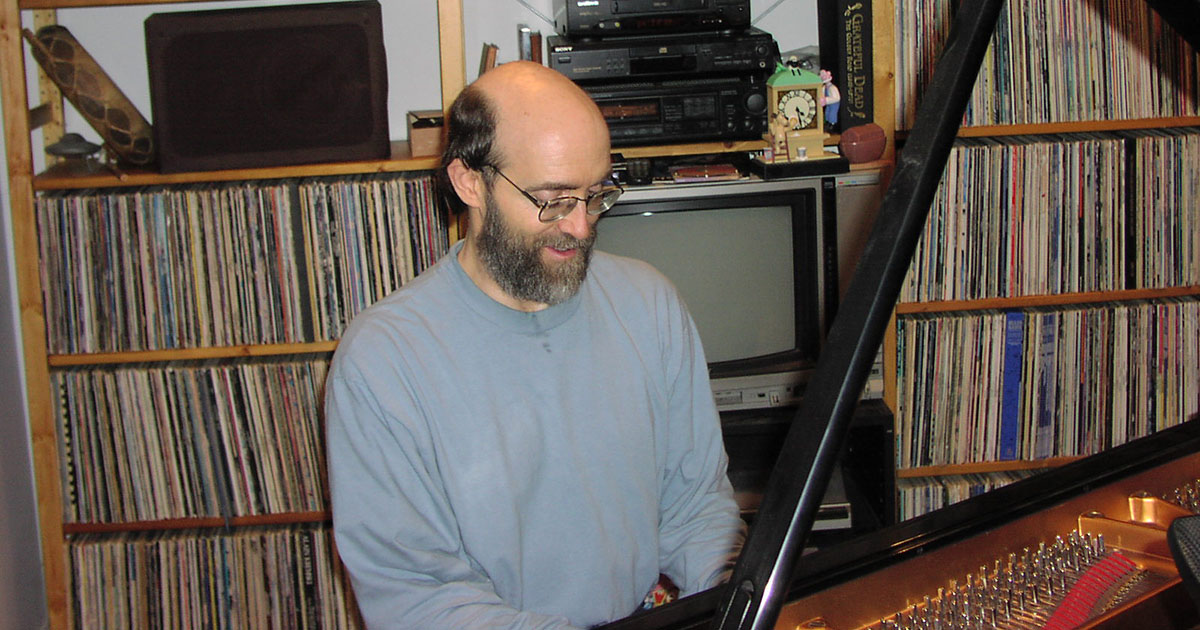
Known for evocative solo piano, George Winston also championed slack key as a producer and collaborator. His sustaining lines and careful dynamics pair naturally with the open tunings of kī hō‘alu. He approached island repertoire with respect and curiosity, helping new audiences discover Hawaiian melodies. This track highlights that sensitivity in dialogue with Keola’s guitar.
Lyrics
Original (Hawaiian)
E aloha ae ana nō au
I ka makani kaulana o ka ʻāina
Aʻu e hoʻoheno nei
Ka makani kā`ili aloha
Hui:
Kuʻu pua, kuʻu lei, kuʻu milimili ē
Kuʻu lei kau i ka wēkiu
A he milimili ʻoe a he hiwahiwa naʻu
A he lei mau no kuʻu kino
I aloha ʻia nō ia home
Ia home luakaha a ka malihini
Aʻu i noho ai a kupa
Ka makani kāʻili aloha
English Translation
I love the
Famous wind of this land
Mine to cherish
The wind named Love-snatcher
Chorus:
My flower, my lei, mine to cherish
My lei that I adore above all others
You are my favorite and precious to me
A lei forever for my body
Beloved is this home
This home so delightful to visitors
Where I stayed many years
With my love that was once snatched by the wind
Track 12: “ʻUlili Ē (The Wandering Tattler)” — Dennis & David Kamakahi
Background
A cheerful folk mele about the sandpiper at the shoreline, “ʻUlili Ē” uses playful onomatopoeia and call‑and‑response. Verses sometimes include a chat with a migrating plover, connecting local beaches to far places like Kahiki. The steady tempo and clear refrain make it ideal for keiki classes and community sing‑alongs. With father and son trading parts, the track radiates ʻohana energy. It’s lighthearted on the surface yet quietly teaches about seasonal cycles and observation of nature.
“Captured a sound that had folks banging on the tables to ‘hana hou!’” — Performance recollection
About the Artists
Dennis Kamakahi
Dennis brings a warm baritone and unhurried guitar that support the song’s playful call‑and‑response. His approach keeps the melody clear for audiences of all ages while preserving the poetry’s charm. As a composer and performer he prized songs that teach about place and season. That sensibility shines in this family duet.
David Kamakahi

David’s high harmonies and ʻukulele sparkle bring a youthful brightness that complements Dennis’s grounded tone. As a performer he balanced precision with ease, inviting audiences into the story. His collaborations with his father modeled how songs travel through ʻohana. Together they kept traditional repertoire vibrant for new listeners.
Lyrics
Original (Hawaiian)
- `Ulili ê (ahahana `ulili ehehene `ulili ahahana)
- `Ulili ho`i (ehehene `ulili ahahana `ulili ehehene)
- `Ulili holoholo kahakai ê
- Oia kai ua lana mâlie
Hone ana ko leo e `ulili ê - O kahi manu noho `ae kai
- Kia`i ma ka lae a`o kekaha
- `Oia kai ua lana mâlie
Hone ana ko leo ko lea ê - Pehea `o Kahiki? Maika`i nô
- `Oia `âina `uluwehiwehi
- `I hui pû `ia me ke onaona
English Translation
The sandpiper
The sandpiper returns
Sandpiper runs along the beach
Where the sea is peaceful and calm
The voice of the sandpiper is soft and sweet
Little bird who lives by the sea
Ever watchful on the beaches
Where the sea is calm
The voice of the sandpiper is soft and sweet
How are you, stranger? Very well
You grace our land
Where the sea is always calm
Track 13: “Wahine ʻIlikea” — Dennis Kamakahi
Background
Often heard as a love song, “Wahine ʻIlikea” is also a Molokaʻi place mele whose “fair‑skinned woman” is the white mist of Kamakou. Verses praise upland waterfalls and Hālawa’s evening breeze, honoring specific landscapes by name. The refrain’s proud “nō ka heke” (“the finest”) has become a signature line for dancers. The melody flows gracefully, balancing tenderness with strength. Its layered meaning lets performers approach it as romance, as geography, or both at once.
“It’s like a woman who reveals her beauty — sometimes she hides, sometimes she shows.” — Dennis Kamakahi
About the Artist
Dennis wrote this mele in the 1970s; it quickly entered the core repertoire for hula and slack key. His voice sits comfortably in the song’s range, and his guitar supports it with rolling arpeggios. In talks and liner notes he explained the kaona so listeners could appreciate Molokaʻi’s presence in the text. The piece shows his gift for writing songs that feel old the moment you hear them. It remains a touchstone for students exploring poetry in Hawaiian.
Lyrics
Original (Hawaiian)
Hui:
Pua kalaunu ma ke kai
ʻO Honouli Wai
Wahine ʻilikea i ka poli ʻo Molokaʻi
Nō ka heke
Nani wale nō nā wailele ʻuka
O Hina ʻo Hāhā ʻo Moʻoloa
Nā wai ʻekolu i ka uluwehiwehi
ʻO Kamalō i ka mālie
Nani wale nō ka ʻāina Hālawa
Home hoʻokipa a ka malihini
ʻĀina uluwehi i ka noe ahiahi
Ua lawe mai ka makani Hoʻolua
English Translation
Chorus:
Crown flower by the shore
Of Honouli Wai
Fair skinned woman in the bosom of Molokaʻi
Is the best
Beautiful waterfalls of the upland
Hina, Hāhā and Moʻoloa
The three waters in the verdant overgrowth
Of Kamalō, in the calm
Beautiful is the land, Hālawa
Hospitable home to the visitors
Land verdant, in the evening mist
Brought by the wind of Hoʻolua
Track 14: “Hanohano Hawaiʻi” — Martin Pahinui (with George Kuo & Aaron Mahi)
Background
This short mele honors four islands by name and flower — Hawaiʻi (lehua), Maui (lokelani), Oʻahu (ʻilima), and Kauaʻi (mokihana). Its verse‑by‑verse roll call makes it perfect for opening or closing a program. The melody invites audience participation and simple, elegant hula gestures. Performers sometimes add verses for the other islands, but the classic version is concise and celebratory. Here the feel is backyard‑jam warmth elevated by expert ensemble playing.
“He always said to respect the song and the composer.” — Martin Pahinui
About the Artists
Martin Pahinui

Martin’s rich voice carries emotional weight without strain, a quality well matched to traditional mele. As a member of the storied Pahinui family, his singing reflects decades of kanikapila traditions. He balanced reverence for classic repertoire with a relaxed delivery that welcomes listeners in. On this track, that warmth sits at the center of the arrangement.
George Kuo

George Kuo’s slack key anchors the harmony with a classic, older‑style feel. His phrasing favors clarity and a gentle swing that supports singers and dancers alike. In ensemble settings he keeps the rhythm buoyant while adding tasteful fills. The result is both sturdy and elegant — an ideal partner for voice and bass.
Aaron Mahi
.jpg?width=800)
Aaron Mahi brings deep musical leadership experience to any collaboration. Best known for his long service with the Royal Hawaiian Band, he supports singers with a steady, uplifting groove. His bass playing makes the pocket feel roomy and welcoming. On this cut he helps the whole arrangement breathe while keeping it moving.
Lyrics
Original (Hawaiian)
Hanohano Hawaiʻi
Sweet lei ka lehua
Kilakila o Maui
Sweet lei lokelani
Ohuohu Oʻahu
Sweet lei ka ʻilima
Kaulana Kauaʻi
Sweet lei mokihana
Haʻina mai ka puana
Sweet lei lei aloha
English Translation
Glorious is Hawaiʻi
For its wreath of lehua
Regal is Maui
With its wreath of roses
Adorned is Oʻahu
With its wreath of ʻilima
Renowned is Kauaʻi
For its mokihana
Tell the refrain
Sweet lei, lei of love
Track 15: “Kokeʻe” — Dennis Kamakahi
Background
This beloved Kauaʻi mele begins “ʻUpu aʻe he manaʻo…” — a thought arising at Kōkeʻe’s summit amid encircling mist. Verses circle sacred Kalalau and beloved Waimea, linking vistas to vows of never saying goodbye. The tune’s rise and fall mirrors cloud bands appearing and lifting over the cliffs. Many communities on Kauaʻi embraced it as an anthem because it sounds like home. It teaches how new compositions can feel timeless when grounded in place.
“On most islands I have a place where I’m inspired to write — in Kōkeʻe, it’s like my soul has been there before.” — Dennis Kamakahi
About the Artist
Dennis called Kōkeʻe a personal spiritual refuge and wrote the song to share that feeling. His relaxed tempo and phrasing let listeners “see” the landscape while they listen. Over time, the mele became a frequent closer at island events, inviting everyone to sing along on the English line. Its success reflects Dennis’s ability to craft melodies that are both singable and evocative. The recording here is spacious, allowing guitar harmonics to shimmer like mist.
Lyrics
Original (Hawaiian & English)
Upu aʻe he manaʻo
I ka wēkiu o Kōkeʻe
I ka nani, o ka āina
O ka noe poʻaiʻai
Hui:
ʻO Kalalau, he ʻāina laʻa
I ka ua liʻi liʻi
ʻO Waimea kuʻu lei aloha
Never more to say goodbye
Hoʻi mai ana i kahikina
I ka la welawela
I ke kai hāwanawana
I Poʻipū ma Kōloa
Mele au no ka beauty
I ka uka ʻiuʻiu
I Kōkeʻe ua ʻike au
I ka noe poʻaiʻai
English Translation
A thought recurs
To the summit of Kōkeʻe
In the beauty of the land
Of the encircling rain
Chorus:
Kalalau is a sacred land
In the drizzling rain
Waimea is my beloved wreath
Never more to say goodbye
Returning to the east
In the doubly hot sun
To the whispering sea
At Poʻipū in Kōloa
I sing for the beauty
In the lofty uplands
At Kokeʻe I saw
The encircling mist
Track 16: “Hanohano Hawaiʻi” — George Kahumoku Jr. (ft. Bob Brozman)
Background
A traditional mele also known as “Sweet Lei Lehua,” its text calls each island by name with its emblematic lei—Hawaiʻi/lehua, Maui/lokelani, Oʻahu/ʻilima, and Kauaʻi/mokihana. This 1997 duet from Drenched by Music is a vocal performance: Kahumoku sings with slack‑key guitar, and Bob Brozman adds steel guitar, keeping the island‑and‑lei roll call at the center of the arrangement.
“Hanohano Hawaiʻi… notice the simplicity of the words and the inferred colors of each island.” — Liner notes
About the Artists
George Kahumoku Jr.

George brings a warm, flowing kī hō‘alu approach grounded in storytelling and aloha ʻāina. His touch emphasizes songfulness over flash, and his shows feel like gatherings of friends. He has also nurtured younger players through his long‑running Maui slack key series. The combination of artistry and mentorship defines his legacy.
Bob Brozman

Bob Brozman was known for expressive slide and resonator playing and for cross‑cultural collaborations. His tone and sustain complement kī hō‘alu beautifully when arranged with restraint. In duet with George he leans into melody and supportive countermelodies rather than showy runs. The result is lyrical and balanced — a conversation, not a contest.
Lyrics
Original (Hawaiian)
Hanohano Hawaiʻi
Sweet lei ka lehua
Kilakila o Maui
Sweet lei lokelani
Ohuohu Oʻahu
Sweet lei ka ʻilima
Kaulana Kauaʻi
Sweet lei mokihana
Haʻina mai ka puana
Sweet lei lei aloha
English Translation
Glorious is Hawaiʻi
For its wreath of lehua
Regal is Maui
With its wreath of roses
Adorned is Oʻahu
With its wreath of ʻilima
Renowned is Kauaʻi
For its mokihana
Tell the refrain
Sweet lei, lei of love
Track 17: “Pua Līlīlehua” — Sonny Chillingworth
Background
This modern classic is a mele hoʻoipoipo (love song) whose lyric by Mary Kawena Pukui and melody by Kahauanu Lake praise the “līlīlehua” — a sage blossom and the name of the famed wind and rain of Pālolo Valley on Oʻahu. The text calls to a cherished beloved and pledges that love is bound fast, using the proverb “hilo paʻa i ka lino hilo pāwalu” (tied firm with an eight‑strand cord). Many hālau favor it for elegant, intimate hula because the imagery is vivid yet refined. The song also carries a personal backstory: Kahauanu Lake composed it for his wife, the kumu hula Maʻiki Aiu Lake. Its balance of romance, place, and craftsmanship explains why it has endured as a standard.
“Composed by Kahauanu Lake for his wife Maʻiki; the Līlīlehua is the wind and rain of Pālolo.” — Song notes
About the Artist
Sonny recorded a cherished version with his nahenahe voice supported by kī hō‘alu. His pacing lets the poetry breathe; he allows rests at key phrases so the kaona can be felt as well as heard. Within his wider discography, he navigated tradition and experimentation with steady feel. This track exemplifies his ability to serve the mele rather than overshadow it.
Lyrics
Original (Hawaiian)
- `Auhea wale ana `oe
- E ka pua lïlïlehua
- A he `ipo ho`ohenoheno
- E ho`ohihi 'ai no ka mana`o
- Iä `oe e `imi ana
- I nä nani o ka `aina
- Eia nö la`au ma`a nei
- E kali ana i kou ho`i mai
- E `alawa mai ho`i `oe
- I nei mau maka onaona
- He mau maka po`ina `ole
- E kapalili ai ko pu`uwai
- Hilo pa`a ia ke aloha
- I ka lino hilo pa walu
- `A`ohe mea e hemo `ai
- Me au `oe a mau loa
- Ha`ina mai ka puana
- E ka pua lili lehua
- A he `ipo ho`ohenoheno
- E ho`ohihi ai no ka mana`o
English Translation
This is to you
O sage blossom
A cherished sweetheart
That attracts the mind
While you go seeking
Among the beauties of the land
Right here I remain
Waiting for your return
Glance quickly this way
At these inviting eyes
These unforgettable eyes
That makes my heart tremble
Love is bound fast
With an eight strand lei
There is nothing to separate
You from me forever
This story is told for you
O sage blossom
A cherished sweetheart
That attracts the mind